
A Four-Stage Model of Character Building: Integrating Western and Confucian Virtue Traditions in Life and Death Education
© Institute of Confucian Philosophy and Culture, 2026
Abstract
Life and death education teaching holds that cultivating virtues such as compassion, gratitude, kindness, and honesty is essential for personal growth and psychological well-being. These life virtues act as catalysts for meaningful action—for example, a teenager volunteering out of kindness or a university student upholding honesty in academics. In this philosophical article, we propose a four-stage character-building model, termed the “4-Stage Model of Character Building,” to explain how specific virtues can be identified, modeled, internalized, and cultivated for personal development: (i) Selecting Virtues to Develop—choosing virtues aligned with personal values; (ii) Practicing Positive Inculcation—reinforcing virtues through intentional daily actions; (iii) Internalizing Virtues—transforming them into core identity traits; and (iv) Achieving Positive Life Outcomes—embodying virtues that foster fulfillment and benefit the community. For instance, a child may develop empathy and cooperation, while a parent models altruism to nurture family harmony. We argue that this structured, sequential process—aligned with teachings from both Western and Confucian ethics—is vital for personal growth and social harmony, guiding individuals toward ethically grounded actions such as volunteering at a homeless shelter. Through deliberate cultivation and internalization, life virtues lay the foundation for personal excellence and enhanced psychological well-being, including greater life satisfaction.
Keywords:
Eastern philosophies, life and death education, life virtues, character building, life cultivation, positive psychology, life, well-beingI. Introduction
A few years ago, our research in positive psychology (Csíkszentmihályi 2014; Seligman and Csíkszentmihályi 2000; Seligman et al. 2009) introduced the concept of “character building” (Phan et al 2020a, 2020b). The cultivation of virtues and moral character has long interested both philosophical and psychological disciplines. Recent interdisciplinary work frames character development not just as an individual pursuit but as a complex process shaped by cultural values, social structures, and psychological mechanisms.
In Western traditions, particularly Aristotelian virtue ethics, “character” is cultivated through repeated practice of moral virtues, guided by practical wisdom (phronēsis) and directed toward personal flourishing (eudaimonia) (Aristotle 2000). This development often emphasizes individual moral autonomy and the fulfillment of personal potential (Annas 2011; Kristjánsson 2007; Sherman 1997). In contrast, Confucian moral philosophy highlights the social and relational dimensions of virtue. Concepts like ren 仁 (humaneness), li 禮 (ritual propriety), and xiao 孝 (filial piety) stress role-based responsibilities, intergenerational respect, and moral cultivation within hierarchical relationships (Ames and Rosemont 1998; Chan 1963). These contrasting orientations—one emphasizing autonomy, the other relationality—offer rich, underexplored opportunities for theoretical synthesis and future research.
The present article proposes a theoretical model of character building that integrates Western and East Asian philosophical traditions with contemporary psychological research. The model consists of four stages: (i) selecting virtues, (ii) practicing inculcation, (iii) internalizing virtues, and (iv) achieving positive life outcomes. It highlights how character cultivation reflects both universal values and culturally specific moral orientations. Our earlier work defined character building (Phan et al. 2020a, 2020b) as the cultivation of inner values that enhance personal and social functioning—for example, a teenager developing a constructive outlook. In education, virtues like resilience link to academic success and well-being. Among East Asian values, filial piety has been noted for fostering academic motivation and social responsibility (Chow and Chu 2007; Hui et al. 2011). Emphasizing respect for elders and familial duties, filial piety exemplifies the moral orientation central to this model.
A. Emphasis of the Present Study
Our central proposition is that certain life virtues may serve as catalysts for moral growth and positive life trajectories (e.g., pursuing altruistic goals). This has practical relevance for educators, psychologists, and others supporting character development across cultures (Phan et al. 2020a, 2020b). It also prompts a key question: Which virtues are most essential for a meaningful, morally grounded life? We view character building not as a fixed trait but as a developmental process. Our model begins with selecting virtues, followed by reinforcement through practice, internalization, and realization of positive life outcomes. Illustrative virtues include loyalty, filial piety, benevolence, love, honesty, justice, harmony, and peace—each contributing to long-term personal and social well-being.
The significance of our approach lies in its cross-cultural applicability, grounded in shared values across Western and East Asian traditions, such as compassion (Nussbaum 2001; Goetz, Keltner, and Simon-Thomas 2010), perseverance (Duckworth et al. 2007; Park and Peterson 2006), and intergenerational respect (Ho 1996; Bedford and Yeh 2019). Our auto-ethnographic narratives —shaped by diverse sociocultural contexts and grounded in our work in life and death education, mindfulness, and Eastern philosophies—support the development of this four-stage model. The article begins by contextualizing life and death education, explores “quality life functioning” in personal development, outlines the model’s philosophical foundations in Aristotelian and Confucian traditions, details the four-stage process, and concludes with implications for well-being and future research.
II. Conceptual Precision in Well-Being Constructs
We begin with a brief discussion on the conceptual precision of well-being constructs (Fraillon 2004; ACU and Erebus International 2008), emphasizing that clarity in terminology is essential for understanding “life education” and “character building.” The literature often includes terms like subjective well-being, societal well-being, mental well-being, psychological well-being, spiritual well-being, optimal best, and flourishing. Notably, “personal well-being” and “subjective well-being” are often used interchangeably. While a full analysis is beyond this article’s scope, we highlight key distinctions and overlaps relevant to educational contexts.
In brief, subjective well-being, psychological well-being, societal well-being, spiritual well-being, and mental well-being encapsulate key dimensions of well-being. Subjective well-being, defined by Diener et al. (1985), focuses on cognitive and affective evaluations of life, including life satisfaction, positive affect, and the absence of negative affect, rooted in the pursuit of pleasure and avoidance of pain. In contrast, psychological well-being, conceptualized by Ryff (1989), emphasizes personal development and fulfillment through six dimensions: autonomy, environmental mastery, purpose in life, personal growth, positive relations with others, and self-acceptance, aligning with the eudaimonic tradition. Societal well-being reflects collective health, social cohesion, and equitable development, highlighting community quality of life (Prilleltensky 2012; Keyes 1998). Spiritual well-being centers on purpose, inner peace, and connection to broader existential beliefs (Ellison 1983; Fisher 2011). Mental well-being involves psychological resilience, emotional stability, and the capacity to manage thoughts, emotions, and behaviors effectively (Keyes 2002; World Health Organization 2005). Together, these constructs capture the multifaceted nature of well-being across personal, social, spiritual, and mental domains. We acknowledge that, where appropriate, we use the term psychological well-being for this study's context, while well-being is used to convey a broader, overarching approach.
Flourishing, closely linked to well-being, represents a holistic state of optimal human functioning, encompassing both feeling good and functioning effectively (Keyes 2002; Seligman 2011). Rooted in the eudaimonic tradition, it extends beyond happiness to include deep life satisfaction, meaningful engagement, positive relationships, and purposeful living. Seligman's (2011) PERMA model outlines five core elements: Positive Emotion, Engagement, Relationships, Meaning, and Accomplishment (Seligman 2018). Those who flourish find fulfillment across personal, social, and psychological domains, contributing to their communities and achieving mastery in life. Complementing flourishing is optimal best, introduced by Fraillon (2004) and developed further by others (e.g., Phan, Ngu, and Williams 2016; Granero-Gallegos, Phan, and Ngu 2023; Phan, Ngu, and Yeung 2019). Optimal best refers to the realization of one's fullest potential through effort, motivation, and contextual support. Beyond competence, it reflects the peak of individual capability under ideal growth conditions. It highlights achievement as dynamic, advancing from current to optimal best through strategic development. Together, flourishing and optimal best illustrate aspirational states of well-being and personal accomplishment, offering pathways toward fulfilling one's potential.
In the context of the present study, we prioritize psychological well-being—particularly purpose in life and personal growth (Ryff 1989)—as a key indicator of moral and virtue-driven development. However, our focus extends beyond psychological well-being to include broader life endeavors, such as appreciating life, reflecting on its humanistic dimensions, including mortality, identity, ethical responsibility as well as engaging in altruistic acts, such as helping others in the community. These elements, we argue, are central to a holistic understanding of moral and virtue-driven development. Through our four-stage model, we propose that cultivating virtues fosters deeper psychological integration and personal growth, supporting flourishing and meaningful life trajectories, including community service. We suggest that meaningful virtues like honesty, integrity, and compassion not only strengthen psychological well-being but also build resilience for life's challenges, such as coping with a relative's death. Embedding such virtues into daily life fosters coherence between values and actions, deepening connections to self and community. Ultimately, we contend that cultivating virtues shapes life trajectories that are not only successful but meaningful, marked by growth, fulfillment, and satisfaction.
III. Impact of Life Education: A Positive Outlook
We begin this section with a concise overview of life education (Chen 2017; Huang 2014; Phan et al. 2020b), a subject we all have experience teaching, alongside our work in death education (Lei et al. 2022; Seng and Lee 2022). Over the past decade, our team has conducted studies examining pedagogical approaches, curricular development, and cultural contexts shaping both life and death education—for example, the recently developed CPPPS Framework of Death Education. These efforts have informed our teaching and contributed to a growing body of scholarship on existential themes in education. Due to word count constraints, we are unable to provide a comprehensive overview of life and death education in this article. However, readers are encouraged to consult existing literature (e.g., Fu 1993; Lei et al. 2022), as well as our own prior work (e.g., Phan et al. 2020b, 2023, 2024), for more in-depth discussions and theoretical foundations.
In brief, life education emphasizes the cultivation of proactive life functioning and enriching life trajectories. Life functioning refers to how individuals operate-cognitively, emotionally, and behaviorally-within changing life contexts. It varies across domains, as seen in:
- • A student mastering Algebra during mathematics studies
- • A senior practicing meditation for self-transcendence
- • A bank employee earning a promotion through sustained effort
These examples illustrate how life functioning develops across roles and life stages. Proactive life functioning involves ongoing engagement, performance, and achievement along life trajectories—planned and experienced courses of action over time. Individuals often pursue multiple trajectories simultaneously, such as balancing work and family roles. Life education supports both altruistic and non-altruistic trajectories, encouraging purposeful and reflective engagement. This fosters personal growth, meaningful experiences, and achievements—for example, academic success, fulfillment in parenthood, or purpose through volunteering. We argue that life education is a valuable investment for individuals and communities, translating theory into practice through personal life wisdom. This integration of transformative knowledge with lived experience reflects the core of life education (Phan et al. 2023). For example, understanding self-transcendence (e.g., Ge and Yang 2023; Gorelik and Shackelford 2017; Llanos and Martínez Verduzco 2022) may shift focus from materialism to spiritual well-being, personal meaning, and transpersonal growth. Life education cultivates a mindset that values inner development and aesthetic appreciation, equipping individuals to meet challenges and pursue deeper fulfillment throughout life.
IV. Our Scholarly Development and Evolving Insights
Over recent years, our life education—and similarly, our death education—has adopted a humanistic lens (Maslow 1971; Bugental 1964; Schneider, Pierson, and Bugental 2014), emphasizing personal growth, self-fulfillment, and the search for meaning and purpose. This perspective encourages students to reflect on their values, relationships, and the broader human experience, fostering a more compassionate outlook on life and death, for example, asking, “Why do I want to live.” Alongside this, our teaching integrates principles from optimal best (Granero-Gallegos, Phan, and Ngu 2023; Phan, Ngu, and Williams 2016; Fraillon 2004) and positive psychology (Seligman 2011; Seligman and Csíkszentmihályi 2000), emphasizing strategies that support both optimal learning and meaningful non-learning experiences, such as an optimal state of health well-being.
Our international collaborations, developed over the past decade, have shaped our thinking, teaching, and research in life and death education. With an internationally diverse team, some of us—teaching life and death education in Taiwan, a society grounded in collectivist values (Kagitcibasi 1997; Triandis 2001) —have integrated Eastern philosophies into our teaching, including elements of Buddhism (e.g., mindfulness) and Confucianism (e.g., veneration for the dead). These inform classroom practices such as mindfulness exercises and discussions on filial piety and ancestor worship. Others, teaching in Western contexts, have likewise introduced Eastern concepts like impermanence (Tzu 2019; Gethin 1998), reincarnation (Barua 2017; Burley 2014), and intergenerational respect (Tu 1985; Bodhi 2016) to broaden students’ perspectives on life and death. These cross-cultural integrations foster a more inclusive, reflective pedagogy, encouraging critical engagement with diverse worldviews and the influence of culture on understandings of life, death, and what may lie beyond. Our multi-institutional collaborations have also fostered meaningful discourse, forming the foundation of this study’s inclusive approach to teaching and research, embracing diversity in beliefs, practices, and worldviews.
A. “Non-Worldly” and Altruistic Attainments in Life
Evolving our teaching of life and death education (Fu 1993; Lei et al. 2022; Phan et al. 2023) emphasizes a humanistic understanding of life (Rogers 1961; Maslow 1971; Bugental 1964), incorporating dimensions of transpersonalism (one’s experiences of unity beyond the self), spiritualism (reflection on the soul or afterlife), and altruism (selfless care for others in end-of-life contexts). Consider the question: What is the purpose of life? While it may seem straightforward—perhaps to live comfortably—at a deeper humanistic level, life’s purpose extends beyond material gratification toward meaning, connection, and self-transcendence.
Based on our interactions with Buddhist nuns and monks in Taiwan, we believe that transpersonal, spiritual, and altruistic experiences help define the notion of life gratification—or what we term life fulfillment. One example is “spiritual connectedness,” an inherently self-rewarding experience that forms a meaningful dimension of life. Importantly, spiritual connectedness here is not limited to a perceived connection with God or a divine being, though it may include such experiences (Phan et al. 2025b). Rather, based on our observations and monastic testimonies, it often emerges as an intense, transpersonal experience from deep within. For example, a Buddhist nun’s daily prostrations before a Buddha statue may foster profound gratitude and spiritual intensity, potentially leading to feelings of enlightenment (Davis 2004; Loden 1996). Though subjective, we uphold a spiritual belief that encourages students to set aside worldly attainments (e.g., financial wealth) and focus on the following:
- i. Engaging in benevolent activities: Actively participating in efforts that bring positivity to others in the community, such as a student volunteering at a homeless shelter every Saturday morning.
- ii. Pursuing self-transcendence: Striving for profound personal understanding and experiences that go beyond oneself, such as the positive impact of spiritual counseling for those who are less fortunate or nearing the end of life.
- iii. Reflecting on personal success: Cultivating an appreciation for the deeper meaning of success by valuing altruistic achievements, such as striving to promote peace and harmony, over materialistic or worldly gains.
The pursuit of altruistic, transpersonal, or moral aspirations, we argue, does not arise naturally. For example, helping a homeless person often requires personal resolve, motivation, and dedication—qualities that must be actively cultivated. Not everyone is inclined to undertake such humanistic tasks. Personal beliefs (e.g., “What do I want for myself?”), family values, and societal expectations often dominate priorities, leading many to set aside or suppress altruistic or moral pursuits. Likewise, the joy of spiritual connectedness—such as a sense of oneness or inner peace—is rarely a deliberate focus in daily life. Instead, immediate demands usually take precedence. A university student, for instance, is more likely to focus on assignments and exams than on spiritual growth or altruistic ambitions. This reflects a broader societal pattern: we prioritize tasks tied to measurable outcomes (e.g., financial success, academic achievement) over cultivating intangible ideals like compassion or moral integrity. Embracing these ideals requires conscious effort, involving a re-evaluation of daily habits that often lean toward self-interest and short-term goals.
V. Theoretical Foundations: Bridging Western and Confucian Virtue Traditions
Our interest in advancing the humanistic nature of life education reflects a desire to merge Western (optimal best practice) and Eastern (understanding the self and existence) philosophies in support of personal growth. Some years ago, we introduced the concept of “life cultivation” or “cultivation of life characters,” though our initial description was limited, as the concept was still developing. A key premise of this article is that life cultivation—here referred to as “character building”—is not just individual choice or habit formation but a cultural process shaped by philosophical traditions and epistemological frameworks. In this section, following a reviewer’s advice, we synthesize Western and Confucian models of virtue cultivation to establish a coherent cross-cultural framework for understanding how life character develops.
A. Western Virtue Ethics: An Introduction
In Western moral philosophy, particularly the Aristotelian tradition, life virtues are viewed as stable dispositions developed through habituation and reason (Hursthouse 1999; Annas 2011). Aristotle contends that the goal of life is eudaimonia—flourishing through the exercise of moral and intellectual virtues in line with reason (Aristotle 2000). Character development here is primarily intrapersonal, requiring intentional practice of virtues like courage, honesty, and temperance, guided by practical wisdom (phronēsis). A person becomes virtuous not merely by performing right actions, but by acting from stable moral character shaped by rational deliberation (Hursthouse 1999; Annas 2011).
Modern societies have drawn on the Aristotelian tradition to deepen understanding of life virtues, adapting these ideas in psychology, education, and philosophy. Positive psychology (Csíkszentmihályi 2014; Seligman and Csíkszentmihályi 2000) incorporates Aristotelian concepts through frameworks like the VIA Classification of Character Strengths (Peterson and Seligman 2004), which includes virtues such as resilience, kindness, gratitude, and integrity. These strengths align with Aristotle’s eudaimonia, promoting well-being and growth via virtuous behavior. Similarly, in character education (Ladikos 2010; Wagner et al. 2020), Aristotelian virtue ethics has shaped initiatives aiming to cultivate moral character in students. School and community programs foster moral development through intentional practice of virtue, based on the idea that ethical behavior arises from habitual action and practical wisdom (phronēsis) (Lickona 1991).
Contemporary philosophical ethics, especially on moral development and virtue ethics, continues to build on Aristotle’s work. Philosophers like Annas (2011) and Hursthouse (1999) expand on his ideas, exploring how virtues can be cultivated in daily life and contribute to personal growth and societal flourishing. These developments reflect a growing recognition that virtues are not just abstract ideals but have practical applications across education, workplace ethics, and community-building.
B. Confucian Ethics and Relational Virtue: An Alternative
In contrast to Western thought, Confucianism holds that virtue is cultivated through social roles, relational obligations, and ritual practice (li) (Ames and Rosemont 1998; Tu 1985; Rosemont 1988). Rather than emphasizing autonomous self-perfection through individual reasoning, Confucian ethics emphasizes “relational embeddedness” (Tu 1985)—the idea that individuals are defined by their roles within social and moral networks. The virtue of xiao (filial piety) embodies affection toward parents and a commitment to preserving family moral integrity (Yao 2000; Tu 1985). Seen as the foundation of other Confucian virtues like loyalty, righteousness, and benevolence, xiao fosters duty, loyalty, and self-discipline extending from the family to the wider community. Through practicing xiao, individuals internalize social norms, develop empathy, and uphold relational responsibilities that broaden into social and civic life.
Similarly, ren 仁 (humaneness) embodies a broad moral sensibility toward others, including empathy, compassion, and altruism (e.g., a teenager patiently caring for an elderly grandparent or a student supporting a struggling classmate) (Ames and Rosemont 1998; Yao 2000). This focus on moral relationality contrasts with Western models, which emphasize internal deliberation, personal autonomy, and virtue cultivated through rational choice and self-reflection (Aristotle 2000; Kohlberg 1981). Confucius also highlights moral cultivation through repeated ritual engagement and habitual practice, suggesting that virtue emerges from disciplined participation in community life (Ames and Rosemont 1998).
As a personal narrative, we share a deep passion for Confucianism. Two co-authors, both Taiwanese, are firm believers in Confucianism, Buddhism, and Taoism, shaped by their cultural and historical backgrounds. Their mindset and behavior closely reflect Confucian teachings, seen in their respect for colleagues, reverence for relatives and ancestors, and commitment to harmony and unity at work. Another colleague, who visits Taiwan regularly for teaching and research, has also noted this “Confucian behavior”—characterized by respect, politeness, and social order—as a widespread cultural trait throughout Taiwanese society.
C. Toward a Synthesized Framework
A synthesis of these traditions offers a deeper, more nuanced understanding of character cultivation. Following a reviewer’s suggestion, the preceding section establishes a clear theoretical foundation bridging Western and Confucian approaches to character building. To support this, Table 1 summarizes our analysis of these contrasting ethical traditions: Western virtue ethics and Confucian relational ethics. This comparison supports advocating for an inclusive framework that integrates intrapersonal intentionality, emphasized in Aristotelian ethics and contemporary psychology, with interpersonal embeddedness, central to Confucian thought. Our model unifies these dimensions into a coherent process of virtue development. This theoretical synthesis underpins the four-stage model presented next: selecting virtues, positive inculcation, internalization, and desirable outcomes. Each stage draws from both traditions, showing how universal principles and culture-specific practices converge to shape character.

A Comparison between Western Ethics and Confucian Ethics
VI. A Philosophical Premise for Consideration
Our research, both philosophical and empirical, has sought to uncover how individuals navigate life's complexities and cultivate meaningful experiences. Drawing on our mindfulness teaching and interactions with monastics in Taiwan, we recently proposed that deep contemplative practice—reflecting a transpersonal state like a profound sense of cosmic unity—can foster what we call the "contented self" (Phan et al. 2025a). This state may help individuals face life's challenges, such as grief, with greater resilience, resolve, and equanimity (Phan et al. 2025a). A key focus is promoting humanistic experiences—for example, a teenager appreciating intergenerational wisdom by caring for an elderly grandparent—rooted in virtues like honesty and love. Such experiences support personal growth and deepen understanding of life's purpose and humanistic engagement.
Contributing to life and death education (Fu 1993; Lei et al. 2022; Phan et al. 2024), we introduced the term character building a few years ago (Phan et al. 2020a, 2020b). Character building, akin to life cultivation, refers to the intentional development of life virtues that support meaningful and well-functioning living. Our model focuses on eight core virtues: loyalty (忠, zhong), filial piety (孝, xiao), benevolence (仁, ren), love (愛, ai), honesty (信, xin), justice (義, yi), harmony (和, he), and peace (平, ping). The next section explains their significance and relevance for character cultivation within both Confucian and Western ethical frameworks.
A. Philosophical and Cultural Sources
We contend that the eight virtues (e.g., loyalty, filial piety) are rooted in classical Confucian teachings (Tu 1985; Yao 2000), particularly the Eight Cardinal Virtues (八德), often discussed alongside the Four Cardinal Principles of morality. These virtues, loyalty, filial piety, benevolence, love, honesty, justice, harmony, and peace are summarized in Table 2. For clarity, they can be grouped into four conceptual pairs: loyalty and filial piety, benevolence and love, honesty and justice, and harmony and peace. Each pair reflects a complementary moral relationship linking the personal with the social, reinforcing Confucianism’s emphasis on ethical conduct in familial, communal, and societal spheres. These virtues are not just individual traits but part of a broader moral cosmology grounded in familial duty, social harmony, and universal order (Tu 1985; Yao 2000).
Inner Virtues for Cultivation
Cultivated through habit and reinforced by ritual, education, and cultural norms, we argue that these eight virtues may form a “humanistic framework” for personal growth and meaningful life experiences. Integrating them into our character-building model highlights both the depth of Confucian ethics and their relevance in contemporary pedagogy and psychology. While grounded in Confucian tradition and supported by empirical character frameworks, these virtues' distinct psychological and relational functions warrant further examination. Unlike Western prosocial traits like kindness or generosity—often seen as voluntary and egalitarian—many Confucian virtues are hierarchical, role-based, and culturally embedded. Table 2 is to aid conceptual clarity. This table outlines three key dimensions through which each virtue may be structured:
- i. Moral framework: The underlying ethical logic or moral architecture of the virtue—for example, whether it is grounded in universal compassion (as with benevolence), in role-based righteousness (as with justice), or in hierarchical obligation (as with filial piety or loyalty).
- ii. Relational orientation: The primary social relationship that the virtue regulates or reinforces—ranging from the vertical bonds of parent-child and superior-subordinate ties, to more distributed or universal relational scopes such as social collectives or all-persons empathy.
- iii. Key psychological mechanisms: The mental and emotional processes through which each virtue may exert effects on well-being (e.g., psychological well-being)—such as group cohesion, role-fulfillment, trust-building, emotional regulation, or moral clarity.
Overall, this virtue-by-virtue analysis and framework allows us to articulate a culturally embedded model of character building that honors the distinctiveness of Confucian ethical thought (Tu 1985; Yao 2000) while aligning with contemporary psychological constructs. Rather than assuming virtues function uniformly across cultures, we emphasize how each uniquely contributes to personal and social development through distinct mechanisms of moral action and psychological experience.
B. Psychological Frameworks and Empirical Support
Contemporary psychological perspectives, including those from positive psychology, identify comparable life virtues to those found in Confucian ethics. For instance, Peterson and Seligman’s (2004) VIA Classification of Character Strengths includes:
- • Honesty, which aligns with the strength of integrity (i.e., being truthful and acting consistently with one’s values)
- • Love, corresponding to capacities for emotional intimacy and care (e.g., forming close relationships based on warmth, compassion, and mutual support)
- • Justice, reflecting fairness and adherence to moral principles (i.e., reflect a commitment to fairness, ethics, and doing what is right)
- • Peace and harmony, though less emphasized in Western psychology, aligning with strengths like forgiveness (the ability to let go of resentment), self-regulation (managing emotions, thoughts, and behaviors), and social intelligence (navigating social situations and relationships effectively)
The sample strengths identified by Peterson and Seligman (2004) show clear overlaps with Confucian virtues. As summarized in Table 3, this convergence highlights the psychological relevance of Confucian virtues within secular, multicultural frameworks for education and character development. By integrating both traditions, our selected virtues aim to bridge cultural philosophy with psychological empiricism.
The Mapping of Life Virtues Across Philosophical Systems
In Confucian societies, life virtues are embedded in daily practices and institutional norms. Filial piety is more than affection for parents; it forms a moral framework for intergenerational responsibility, educational discipline, and social conduct (Ho 1996). It is expressed through caring for elders, preserving family honor, participating in ancestral rites, and respecting hierarchies. As Tu (1985) notes, filial piety extends beyond the household, fostering civic duty and social order. Similarly, honesty and justice guide ethical conduct in business, education, and governance—honesty fostering trust, justice ensuring fairness and reciprocity. Harmony reflects the balancing of social and personal interests, not simply the absence of conflict (Li 2006). Loyalty stresses commitment to collective responsibility, while benevolence and love embody compassion and empathy in relationships. Peace both an outcome and an ideal, encapsulates Confucianism’s vision of moral and societal equilibrium.
C. A Comparative Overview: Flexibility and Inclusiveness
Table 3 provides a brief comparison of Confucian and Western traditions. This framework, we suggest, can assist educators, researchers, and policymakers in identifying shared virtues while appreciating cultural variations in their interpretation and application (e.g., reverence for filial piety in Confucianism vs. emphasis on individual resilience in Western thought). While the eight virtues serve as the foundation of our model, we acknowledge that virtue traditions vary across cultures, eras, and contexts. For instance, filial piety, central to Confucian ethics (Tu 1985; Yao 2000), may hold less moral weight in Western contexts, where individual autonomy is often prioritized. Conversely, virtues like independence, perseverance, and civic engagement tend to be more emphasized in Western frameworks.
VII. The Significance of Inner Life Virtues and Process of Character Building
As illustrated in Figure 1, our conceptualization proposes that cultivating humanistic virtues is essential for holistic personal development. Virtues such as loyalty, filial piety, and honesty (see Table 2) enable individuals to pursue desirable life outcomes, which—though subjective and shaped by sociocultural contexts—reflect personal aspirations. For example, one person may seek financial success, while another values altruistic pursuits. These varying goals highlight the need to cultivate virtues aligned with personal growth. We also recognize other key virtues—sibling harmony, dedication, trustworthiness, and honor—that enrich moral development and communal well-being. Loyalty, filial piety, and related virtues form part of “human qualities” or “human perfection” (Phan et al. 2023): desirable attributes guiding individuals toward meaningful, self-fulfilling lives. Human perfection refers to embodying these virtues, emphasizing the importance of living by one’s values to achieve a purposeful life.
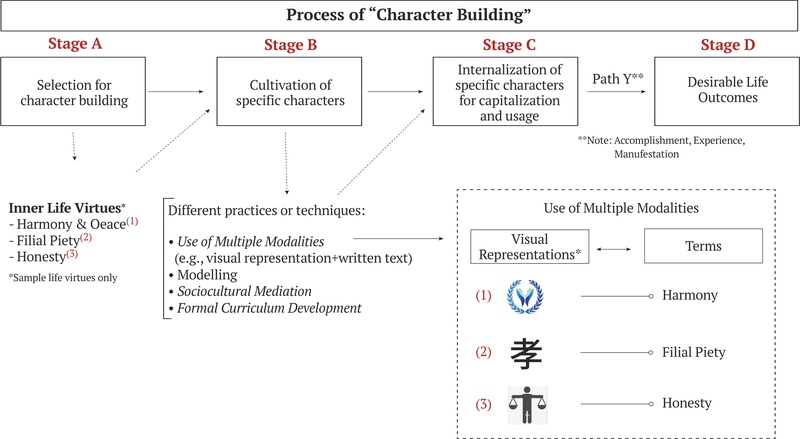
Process of Character Building11 These are sample life virtues only. By all accounts, there are comparable life virtues that one may choose to consider.
In brief, our conceptualization posits that acquiring life virtues profoundly influences personal development, as illustrated by Path Y in Figure 1. These virtues foster enriched experiences, successful achievements, and desirable outcomes. For example, a student studying Islamic spirituality may deepen their understanding of its principles, promoting intellectual and spiritual growth that shapes their broader life trajectory.1 Life virtues also shape well-being,2 emerging from inner qualities like kindness, generosity, forgiveness, and honesty. These virtues support fulfillment and life satisfaction. Embedding them in daily life fosters growth, achievement, and sustained well-being, promoting purpose, resilience, and deeper connections with others. This virtuous foundation, in turn, creates a pathway for continuous personal development and a richer, more meaningful life.
Character building, as outlined here, is an ongoing, dynamic process comprising multiple stages (Fig. 1) that foster personal growth. Our four-stage model, grounded in philosophical analysis, reflects on a key question: how do individuals acquire or develop life virtues? Are virtues innate, or shaped by life experiences and contexts? What we offer is philosophical and speculative, open to alternative interpretations. The four stages—A, B, C, and D—represent phases where reflection and adaptation progressively strengthen virtues. This approach emphasizes that character building emerges through both internal insight and external influence, supporting a fulfilling life. By framing it as a process, we highlight the importance of continuous self-cultivation, where developing virtues fosters self-awareness, moral clarity, and alignment with meaningful life purposes.
The significance of our four-stage character-building model lies in its view that specific life virtues can be identified, modeled, internalized, and cultivated for personal development—such as honesty, which helps a child value truth-telling, take responsibility, and adopt honesty as a daily guiding principle. The core focus is the cultivation process: how one develops essential virtues for growth. Our proposition adds insight by highlighting the potential use of various modalities, especially symbols or visual forms (e.g., Chinese ideograms), to capture the meaning of a virtue and enhance cognitive processing, such as recall and recognition.
A. Stage A: “Selection for Character Building”
Stage A focuses on identifying and selecting life virtues crucial for personal development. This foundational step requires individuals, with or without guidance, to reflect on and prioritize virtues that align with their values and life context. For instance, one might choose to cultivate virtues like honesty or integrity based on their significance. In this article, we focus on eight virtues, including loyalty, filial piety, and honesty (Table 2). The process of virtue selection involves intentional moral reflection. In Aristotelian ethics, this stage aligns with practical wisdom (phronesis), where individuals assess which virtues are most suitable for their circumstances. In Confucianism, virtue selection is more about aligning moral development with familial and societal roles. Psychologically, this stage corresponds with Schwartz’s value theory and moral identity framework, where self-chosen values shape identity and motivate behavior (Aquino and Reed 2002; Schwartz 1992). It also aligns with goal-setting theory (Locke and Latham 2002; 1990), which emphasizes the importance of intentional virtue selection in guiding personal growth. The identification and selection of these virtues are not arbitrary; they are deeply connected to personal understanding, which includes the following considerations:
- a) The Significance of the Life Virtue: It is essential for an individual to comprehend the true meaning of a given life virtue. For instance, how does the virtue of filial piety contribute to one’s motivation to succeed academically? Understanding how these virtues apply to various aspects of life—both personally and in relation to others—lays the groundwork for meaningful life development.
- b) The Importance of Life Virtues: Beyond their individual significance, life virtues inform a person’s overall framework for ethical living. They help individuals understand why cultivating these virtues matters. For example, a child may learn from the practice of filial piety why it is essential to respect and care for their parents, understanding the deeper life connections that such acts of respect foster.
- c) Consequences of a Lack of Virtues: Equally important is reflecting on the potential consequences of lacking desirable life virtues. For example, a person who neglects virtues like honesty and kindness might be more prone to engaging in anti-social behaviors or suffering negative social and emotional outcomes. Acknowledging these potential pitfalls enhances a person’s awareness of the role virtues play in shaping a productive, fulfilling life.
The process of identification and selection also involves internalizing insights from various sources and life contexts. Throughout a person’s life, they will encounter different informational sources and experiences that significantly shape their understanding of life virtues. For example, witnessing or practicing acts of reverence, such as prostration in a religious context (Yousefzadeh et al. 2019; Tottoli 1998), can imbue a child with respect for divine principles. Similarly, challenging life experiences such as poverty or suffering can nurture compassion and empathy, while events that provoke shame or remorse may stimulate a stronger commitment to moral behavior. In this context, we recognize that life contexts—both formal and informal—serve as crucial teaching tools. Formal education, for instance, can provide structured opportunities to teach the relevance of virtues, moral development, and life goals. Piaget’s (1932) theory of moral development provides an insightful framework for how children understand morality and its importance, particularly through concepts such as “intent” vs. “consequence” (Cowan et al. 1969; Patanella 2011). Direct and indirect methods of teaching these concepts, including peer-assessment practices, can significantly deepen children’s understanding of honesty, transparency, and the ethics of social relationships (Smith, Cooper, and Lancaster 2002; Sivan 2000; Lee 2008).
In sum, Stage A of character building underscores the importance of identifying and selecting meaningful life virtues. This stage is a cornerstone of personal growth, with formal education and everyday life experiences playing pivotal roles in shaping one's understanding of these virtues. By helping individuals reflect on the significance of life virtues, their consequences, and their applications, we facilitate a deeper alignment with virtuous living, which serves as a foundation for personal and moral development in subsequent stages.
B. Stage B: "Cultivation of Specific Life Characters"
Stage B, or positive inculcation, is a critical phase in character building. It focuses on the reinforcement and cultivation of selected life virtues, preparing them for future application. Positive inculcation is a structured practice that efficiently embeds virtues into memory through formal teaching, modeling, and ritual. What sets our framework apart is the emphasis on making virtue recall and application automatic. Through various techniques, the goal is to internalize virtues to the point where they can be spontaneously and immediately enacted. In Confucianism, li (ritual propriety) formalizes moral training, with repetitive social rituals fostering dispositions of respect, humility, and harmony (Ames and Rosemont 1998). In Western psychology, Bandura's (1977b, 1997) social learning theory highlights the role of modeling and reinforcement in shaping moral behavior. Moral exemplars, whether familial or cultural, provide templates for imitation. We argue that positive inculcation bridges the cognitive and behavioral domains, as repeated moral actions shape both habits and beliefs, reinforcing virtues at a subconscious level. Character education programs can use both ritual and modeling strategies to embed virtues effectively in learners. We propose several techniques or practices of positive inculcation that can facilitate the automation of memory retention with greater efficiency, as illustrated in Figure 1:
- a) The Use of Specific Characters (e.g., Chinese Ideograms or Visual Representation): Cognitive processing of information is crucial for effective learning. Research by Pollock, Chandler, and Sweller (2002) and Tindall-Ford, Chandler, and Sweller (1997) underscores the importance of cognitive load and the ability to manage multiple forms of information. When we incorporate various modalities in learning, such as text and visual elements, we tap into different cognitive channels, which enhances the learning experience (Leahy and Sweller 2011; Paivio 1986). This approach can be particularly effective in helping learners process and retain complex concepts. For example, in Fig 1, we employ Chinese ideograms to symbolize important life virtues. The term “xiao 孝” represents filial piety, and other virtues, like harmony and honesty, are depicted using appropriate characters (e.g., honesty as “
 ”). The choice of visual representation in place of, or alongside, text serves not only as an aesthetic gesture but also a pedagogical one. By using visual modalities, such as the character “孝,” learners can connect more immediately with the concept, capturing their attention more effectively and aiding memory retention (Bobek and Tversky 2016; Balmuth 1968; Mayer et al. 1996). In line with Paivio's (1986) dual coding theory, we posit that these visual representations-offered as non-textual modalities-assist in simplifying and augmenting the verbal explanations of abstract concepts like filial piety. Thus, the visual form acts as both an anchor and facilitator of cognitive processing.
- b) We argue that incorporating visual elements (e.g., “孝”) into learning experiences enhances understanding. These visual cues (e.g., “
 ”) become more easily associated with corresponding written terms and theoretical concepts, ultimately aiding in efficient cognitive processing. As illustrated in Fig 2, our conceptual framework advocates for a combined approach of text and visual modalities for better retention and understanding of life virtues. A crucial element within this process is “equivalency,” the congruent association between a visual representation and its corresponding written term. This equivalency fosters a strong link between the two forms of expression, streamlining the learning process and automating memory recall. The connection between the visual representation and its theoretical meaning helps internalize and automate learning, thus enhancing overall comprehension.
- c) The Role of Appropriate Role Modelling: Vicarious learning, via observation of appropriate role models, is another critical component of character development (Bandura 1977b; Zimmerman and Rosenthal 1974). According to Bandura's (1977b, 1977a) social learning theory, individuals learn by observing and imitating behaviors deemed to be beneficial. This principle holds significant relevance in educational contexts, where learners observe and reflect on the behaviors of their peers, teachers, and caregivers. For example, students who observe peers demonstrating specific learning or social skills may be more likely to emulate those behaviors for their own growth (Hammersley-Fletcher and Orsmond 2005). Similarly, classical research in the 1980s3 highlighted the instrumental role of peer models in behavior modification, notably in areas like arithmetic and academic achievement.
- d) In line with these findings, we theorize that appropriate role models, such as capable peers or mentors, play a fundamental part in shaping how life virtues—emotional well-being, interpersonal skills, and empathy4—are observed and internalized. For instance, teachers and caregivers embody the values of integrity, empathy, and honesty, all of which are invaluable for students to observe and model in their own behavior. Building on Lumpkin's (2008) suggestions, we propose that teachers can serve as powerful exemplars of moral virtues, guiding their students by demonstrating appropriate behaviors, both in academic and social contexts. In this context, formal learning can incorporate moralistic role models, such as Nelson Mandela, whose life embodies virtues of compassion and integrity. Beyond the classroom, informal settings, like Bible study sessions, offer additional opportunities for children to witness and learn about life virtues in real-world contexts.
- e) The Importance of Sociocultural Meditation: The concept of "sociocultural mediation," introduced in our recent work (Phan et al. 2024), emphasizes the importance of understanding how historical-sociocultural contexts influence the development of life virtues. Sociocultural contexts provide a unique lens through which certain virtues are understood, valued, and practiced. For example, Tibetan cultural beliefs include notions of reincarnation,5 while Taiwanese sociocultural practices emphasize rituals like “Guan Lou Yin,” which honor departed loved ones. These varied sociocultural practices influence the way individuals within these groups develop and value virtues such as filial piety or respect for ancestors.
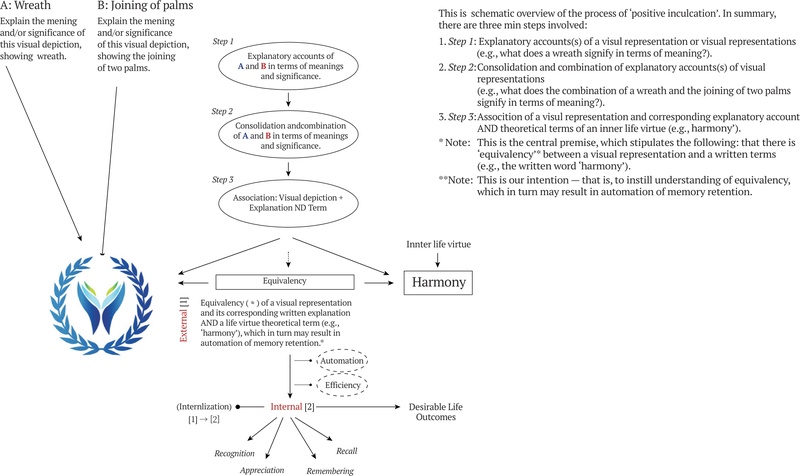
Explanatory Account of Positive Inculcation
The role of sociocultural context is particularly significant when we examine virtues like filial piety, a value deeply embedded in many Asian cultures (Chow and Chu 2007; Hui et al. 2011). Within these cultures, filial piety is not merely a personal value but an integral aspect of communal and familial life. Some sociocultural contexts place heavy emphasis on maintaining respect for elders and upholding family honor, which can be directly linked to cultural practices such as ancestor worship (Townsend 1969; Lakos 2010; Clark and Palmer 2016). These cultural practices mediate how individuals understand and express virtues, allowing for deeper, more culturally informed learning experiences.
- a) Formal Curriculum Development: Another pivotal component in the cultivation of life virtues is formal curriculum development. The integration of life virtues into academic curricula plays a significant role in formalizing their importance. In many educational systems, such as Taiwan’s life education curriculum (e.g., Ministry of Education Taiwan 2008, 2011), specific life virtues—such as spirituality, moral values, and love—are embedded into educational content, thus reinforcing their importance in students’ development. Including life virtues in the formal curriculum provides students with structured, yet accessible opportunities to engage with these concepts, both in theory and practice.
- b) Curriculum development can also incorporate interdisciplinary approaches that emphasize positive psychology,6 civics education,7 and related subject areas. For instance, life education courses provide direct instruction on moral and ethical values, while civics classes further develop a student’s understanding of societal roles and responsibilities. A notable example of this approach in practice is the mandatory “Life Enlightenment” course in some universities, which students are required to complete as part of their undergraduate studies.
Overall, then, Stage B in our framework focuses on “positive inculcation” as a process that involves utilizing a variety of techniques to cultivate life virtues in students. Visual representations, appropriate role models, sociocultural practices, and formal curriculum integration work synergistically to provide a multifaceted approach to character building. Visual modalities, like those depicted in Figure 2, allow students to process life virtues through multiple cognitive channels, enhancing retention and understanding. Role models, both formal and informal, provide opportunities for students to observe and model positive behaviors, while sociocultural contexts further shape how these virtues are internalized. Finally, formal curricula that prioritize life virtues ensure a comprehensive approach to character development.
C. Stage C: “Internalization of Specific Life Characters for Capitalization and Usage”
Stage C focuses on the internalization of life virtues - transforming external behaviors into an integral part of one’s identity. As shown in Figure 2, which builds on the model in Figure 1, internalization is conceptualized as a two-step process: [1]* → [2]**, where [1] represents the external reinforcement from Stage B, and [2] reflects the internal assimilation of virtues at Stage C. Our framework draws from Vygotsky’s (1978, 1981) sociocultural theory, emphasizing how social learning becomes internal cognitive structure. At this stage, individuals move from habit to identity. Virtues shift from being practiced behaviors to becoming enduring traits. In Aristotelian terms, this is the formation of hexis-a stable disposition to act rightly. Similarly, Confucian thought describes this transformation as the embodiment of ren, or moral selfhood, realized through everyday conduct (Tu 1985). Psychological theories such as Deci and Ryan’s (2000, 2008) self-determination theory, (2004) identity development model, and our recent concept of the Contented Self (Phan et al. 2025a) collectively affirm that internalization supports sustained motivation and coherent moral behavior. Crucially, environments that support autonomy and respect cultural values play a vital role in facilitating this transformation. According to our conceptualization, internalization is a transformative process (i.e., from Figure 2, the transformation of [1] into [2]) through which acquired information is absorbed and internalized. Central to the process of internalization are the following cognitive functions:
- a) Recognition: The conscious awareness and formal acknowledgment that learned and acquired life virtues possess power and relevance in relation to real-life situations. It is the awareness that these virtues are not merely abstract concepts but have tangible impacts on one’s life.
- b) Appreciation: A person’s conscious recognition of the significance of possessing these life virtues and the effort to value their importance in fulfilling various life purposes. This involves developing a deeper understanding of how the virtues positively influence one’s interactions and decision-making.
- c) Remembering: The ability to retain information related to life virtues in long-term memory. This memory storage makes it possible for the person to access and apply these virtues over time.
- d) Recall: The capacity to retrieve stored information about life virtues from long-term memory. For instance, a child’s ability to remember and apply the concept of integrity in situations where moral decisions are required.
The combination of recognition, appreciation, remembering, and recall (collectively referred to as “RACC”) defines the process of internalization. We argue that these cognitive elements are intrinsically linked to one’s perception, judgment, and assessment of the virtues' relevance in daily life. For example, does a nine-year-old child perceive the concept of harmony as relevant and significant to her life? Is harmony something she considers essential for her interactions with family, friends, and peers? Internalization—moving from [1] to [2] in Figure 2—requires careful judgment, where the individual determines which life virtues are most meaningful for their development and understanding. Through this process, virtues are not just learned, but are also carefully selected, understood, and integrated into the individual's cognitive and emotional framework. Ultimately, internalization transforms acquired virtues from external knowledge into internalized principles that guide personal growth and behavior.
D. Stage D: “Desirable Life Outcomes”
Stage D emphasizes the importance of realizing meaningful and personally valued life outcomes (e.g., Path Y in Figure 1). This stage involves a reflective understanding of what one seeks to accomplish in life—whether academic success, financial stability, or altruistic endeavors. We propose that the cultivation of life virtues positively influences the achievement of these outcomes. Virtues provide a moral and motivational foundation that shapes life goals and guides purposeful action. The culmination of character development is the alignment between internal virtue and external accomplishment. In Confucianism (Ames and Rosemont 1998; Yao 2000), this is reflected in contributing to social harmony; in Western thought, it corresponds to eudaimonia—the full realization of human potential (Ryff 1989; Seligman 2011). Empirical evidence shows that individuals with strong moral character—demonstrated through prosocial behavior, empathy, and self-regulation—experience greater psychological well-being, life satisfaction, and personal flourishing.8 These benefits extend beyond the individual, promoting positive and resilient communities.
The process of self-awareness regarding the power and relevance of life virtues (i.e., from Stage C to Stage D) underscores the importance of character building. This step affirms that a life virtue one acquires has a clear purpose, both in day-to-day life and across one's lifetime. It suggests that cultivating these virtues is a form of investment—a meaningful and worthwhile pursuit. For example, in daily life contexts, we may consider a common yet negative situation that arises in schools: disengagement, truancy, and delinquency.9 In this regard, we ask whether “character building” could be leveraged as a proactive approach to address and prevent these issues. Could cultivating virtues help reduce truancy or combat antisocial behaviors like delinquency?10
We argue that positive character development and life cultivation can, indeed, remediate negative situations and foster beneficial changes. For instance, as a preventive strategy, teaching and reinforcing the life virtue of honesty could counteract destructive behaviors by offering a positive framework to replace those actions. In this view, character building becomes an essential tool to guide an individual (such as a teenager engaging in criminal behavior) onto a more constructive and righteous path. In this sense, the embodiment of acquired life virtues serves as not just a personal growth tool but also a societal remedy, potentially transforming negative life contexts into opportunities for growth and improvement.
In summary, Stage D highlights the vital connection between internalized life virtues and the accomplishment of life’s meaningful outcomes. By recognizing the practical application and impact of virtues such as honesty, kindness, or integrity, individuals are more likely to engage with these virtues in daily life, contributing positively to their personal development and the betterment of society.
E. Summation
In summary (see Table 4), our four-stage character-building process is novel in its conceptualization. The idea of “cultivating inner life virtues” for meaningful purposes aligns with the broader concept of “life cultivation.” Developing virtues like filial piety, integrity, and harmony is a deliberate, constructive effort that can profoundly shape one’s life path. Central to this process is the concept of “automation,” which we define as a key theoretical element.
Summary of Process of Character Building
In our framework, automation goes beyond simply practicing a virtue more efficiently. It refers to the process where recognition, identification, and association of a life virtue become automatic and spontaneous. For example, using multimodal learning—such as pairing visuals with text—can trigger this spontaneity. An individual might instantly associate an image of an upright person (e.g., "
") with the virtue of honesty, leading to immediate recognition and internalization without heavy cognitive effort. This automation is essential for the sustained development of virtues over time.
Personal understanding of morals, proper behavior, and social etiquette typically begins in early childhood. Building a strong moral foundation early—such as grasping the virtue of integrity—is crucial for positive life outcomes. This foundation guides individuals in discerning right from wrong and making wise, ethical decisions later in life. Conversely, lacking this moral grounding can lead to negative paths; for example, an unsupportive home or poor moral education may contribute to truancy, which can escalate into more serious issues like criminal behavior.
It is essential to teach children not only basic facts but also the deeper meaning of life virtues, which shape their worldview and guide their decisions. Unlike academic subjects prone to being forgotten, life virtues, such as honesty, offer lasting guidance throughout life. Both the school system and home environment play vital roles in cultivating these virtues, ensuring they are deeply ingrained. Early fostering of life virtues equips children with the tools to grow into thoughtful, responsible, and compassionate adults.
VIII. Future Directions for Consideration
Our philosophical approach has limitations. We invite researchers, students, and practitioners to critically engage with our proposed four-stage model for cultivating life virtues. While we advocate for its conceptual and practical value, we acknowledge the need for further exploration and refinement in key areas:
- a) Are there “universal” life virtues that transcend sociocultural boundaries? A reviewer of an earlier draft challenged our choice of eight virtues (e.g., filial piety), highlighting concerns about cultural specificity (Markus and Kitayama 1991). Filial piety, central in Confucian ethics and East Asian moral development (Ho 1996; Yao 2000), may hold less moral weight in Western cultures that emphasize individual autonomy (Triandis 1995, 2001). We clarify that our selected virtues are illustrative, reflecting our context and appreciation for life virtues. Other virtues—such as respect—might be more globally relevant or culturally specific and deserve consideration in future versions of the model (Nussbaum 2001; Schwartz 1994).
- b) Can we provide greater clarity on the desired humanistic outcomes linked to moral and virtue development? Throughout this manuscript, we emphasize psychological well-being—especially purpose in life and personal growth (Ryff 1989)—as key outcomes of fulfillment. We also highlight broader meaningful endeavors, such as altruism (Seligman 2011). Future research could aim to clarify and operationalize these life-related outcomes further, enhancing the model’s applicability across various contexts (e.g., education vs. community development). This would help reveal how virtues like compassion, integrity, and honesty manifest across cultures and social settings, offering a deeper understanding of moral and virtue-driven growth.
- c) Is there an alternative framework for character development that better reflects other sociocultural paradigms? Our model, with its philosophical leanings toward Eastern thought (Ma and Tsui 2015; Cheng 2004), may be seen as subjective. While we aim for a transdisciplinary, integrative approach, we encourage exploration of alternative or complementary models aligned with different cultural, philosophical, or educational traditions (Sen 2001; Noddings 2015). For instance, character building frameworks grounded in positive psychology11 or optimal best practice12 emphasize flourishing, resilience, and maximizing potential under ideal conditions, offering alternative perspectives on moral and virtue-driven development.
In summary, we present our model as a meaningful starting point rather than a final solution. We hope it sparks interest, curiosity, and motivation for further development in character-building education across diverse cultural and intellectual contexts. Building on our discussions, researchers can refine our four-stage model or create alternative frameworks aligned with different cultural, philosophical, or educational perspectives. These efforts could deepen understanding of virtue cultivation, moral development, and psychological well-being, leading to more robust, context-sensitive approaches to character education.
IX. Conclusion
The study of life cultivation, defined as nurturing life functioning, aligns with the paradigms of positive psychology13 and life education (Huang 2014; Chen 2017; Tsai 2008). Our research introduces the concept of “character building” (Phan et al. 2020a, 2020b), a process designed to foster inner virtues and quality traits for meaningful living. Character building is not a spontaneous or one-time event but a deliberate, continuous effort. We propose a framework with four key stages: identifying and selecting life virtues for cultivation, practicing positive inculcation, internalizing these virtues, and achieving desirable life outcomes. This concept emphasizes the long-term value of character building as a meaningful investment in personal development and societal well-being.
References
- ACU and Erebus International. 2008. Scoping Study into Approaches to Student Well-being: Literature Review. Report to the Department of Education, Employment and Workplace Relations. Sydney, Australia: Australian Catholic University.
- Ames, Roger T., and Henry Rosemont Jr. 1998. The Analects of Confucius: A Philosophical Translation. New York: Ballantine Books.
-
Annas, Julia. 2011. Intelligent Virtue. Oxford, UK: Oxford University Press.
[https://doi.org/10.1093/acprof:oso/9780199228782.001.0001]

-
Aristotle. 2000. Aristotle: Nicomachean Ethics. Translated by Terence Irwin. Hackett Publishing.
[https://doi.org/10.1017/CBO9780511802058]
-
Aquino, Karl, and Americus Reed II. 2002. “The Self-Importance of Moral Identity.” Journal of Personality and Social Psychology 83 (6): 1423-40.
[https://doi.org/10.1037/0022-3514.83.6.1423]
- Balmuth, Miriam. 1968. “Visual and Auditory Modalities: How Important Are They?” Thirteenth Annual Convention of the International Reading Association, Boston, Massachusetts.
-
Bandura, Albert. 1977a. “Self-Efficacy: Toward a Unifying Theory of Behavioral Change.” Psychological Review 84 (2): 191–215. http://www.ncbi.nlm.nih.gov/pubmed/847061, .
[https://doi.org/10.1037/0033-295X.84.2.191]
- Bandura, Albert. 1977b. Social Learning Theory. Englewood Cliffs, NJ: Prentice-Hall.
- Bandura, Albert. 1997. Self-Efficacy: The Exercise of Control. New York: W. H. Freeman.
-
Barua, Ankur. 2017. “The Reality and the Verifiability of Reincarnation.” Religions 8 (162): 1–13.
[https://doi.org/10.3390/rel8090162]
-
Baumeister, Roy F. 1993. Self-Esteem: The Puzzle of Low Self-Regard. Edited by Roy F. Baumeister. New York, NY: Plenum Press.
[https://doi.org/10.1007/978-1-4684-8956-9]
-
Bedford, Olwen, and Kuang-Hui Yeh. 2019. “The History and the Future of the Psychology of Filial Piety: Chinese Norms to Contextualized Personality Construct.” Frontiers in Psychology 10: Article 100.
[https://doi.org/10.3389/fpsyg.2019.00100]
-
Bobek, Eliza, and Barbara Tversky. 2016. “Creating Visual Explanations Improves Learning.” Cognitive Research: Principles and Implications 1 (1): 27.
[https://doi.org/10.1186/s41235-016-0031-6]
- Bodhi, Bhikkhu. 2016. The Buddha’s Teachings on Social and Communal Harmony: An Anthology of Discourses from the Pali Canon. Somerville, MA: Wisdom Publications.
-
Bonab, Bagher Ghobari, Maureen Miner, and Marie-Therese Proctor. 2013. “Attachment to God in Islamic Spirituality.” Journal of Muslim Mental Health 7 (2): 77–104.
[https://doi.org/10.3998/jmmh.10381607.0007.205]
-
Brown, Kirk Warren, and Richard M. Ryan. 2003. “The Benefits of Being Present: Mindfulness and Its Role in Psychological Well-Being.” Journal of Personality and Social Psychology 84 (4): 822–48.
[https://doi.org/10.1037/0022-3514.84.4.822]
-
Bugental, James F. T. 1964. “The Third Force in Psychology.” Journal of Humanistic Psychology 4 (1): 19–26.
[https://doi.org/10.1177/002216786400400102]
-
Burley, Mikel. 2014. “Taking Reincarnation Seriously: Critical Discussion of Some Central Ideas from John Hick.” International Journal of Philosophy and Theology 75 (3): 236–53.
[https://doi.org/10.1080/21692327.2014.967975]
-
Cain, Glenda, and Yvonne Carnellor. 2008. “Roots of Empathy: A Research Study on Its Impact on Teachers in Western Australia.” The Journal of Student Well-being 2 (1).
[https://doi.org/10.21913/JSW.v2i1.168]
- Chan, Wing-Tsit. 1963. A Source Book in Chinese Philosophy. Princeton, NJ: Princeton University Press.
- Chen, Shu-Chen. 2017. “Constructing Campus Culture with Life Education: Taking the Education of HuaFan University as an Example.” International Conference on Life Education, Taipei City.
-
Cheng, Chung-Ying. 2004. “A Theory of Confucian Selfhood: Self-Cultivation and Free Will in Confucian Philosophy.” In Confucian Ethics: A Comparative Study of Self, Autonomy, and Community, edited by Kwong-Loi Shun and David B. Wong, 124–42. Cambridge University Press.
[https://doi.org/10.1017/CBO9780511606960.008]
- Chow, Stephen Sau-Yan, and Matthew Ho-Tat Chu. 2007. “The Impact of Filial Piety and Parental Involvement on Academic Achievement Motivation in Chinese Secondary School Students.” Asian Journal of Counselling 14 (1 & 2): 91–124.
- Clark, Kyle J., and Craig T. Palmer. 2016. “Ancestor Worship.” In Encyclopedia of Evolutionary Psychological Science, edited by Viviana Weekes-Shackelford and Todd K. Shackelford, 1–3. Cham: Springer International Publishing.
- Cogan, John J., Paul Morris, and Murray Print. 2002. Civic Education in the Asia-Pacific Region: Case Studies Across Six Societies. New York: Routledge.
-
Cowan, Philip A., Jonas Langer, Judith Heavenrich, and Marjorie Nathanson. 1969. “Social Learning and Piaget's Cognitive Theory of Moral Development.” Journal of Personality and Social Psychology 11 (3): 261.
[https://doi.org/10.1037/h0027000]
-
Csíkszentmihályi, Mihaly. 2014. “Toward a Psychology of Optimal Experience.” In Flow and the Foundations of Positive Psychology, 209–226. Springer.
[https://doi.org/10.1007/978-94-017-9088-8_14]
-
Damon, William. 2004. “What Is Positive Youth Development?” The Annals of the American Academy of Political and Social Science 591 (1): 13–24.
[https://doi.org/10.1177/0002716203260092]
- Davis, Roy Eugene. 2004. The Simplicity of Spiritual Enlightenment. Lakemont, Georgia: CSA Press.
-
Deci, Edward L., and Richard M. Ryan. 2000. “The ‘What’ and ‘Why’ of Goal Pursuits: Human Needs and the Self-Determination of Behaviour.” Psychological Inquiry 11: 227–68.
[https://doi.org/10.1207/S15327965PLI1104_01]
-
Deci, Edward L., and Richard M. Ryan. 2008. “Self-Determination Theory: A Macrotheory of Human Motivation, Development, and Health.” Canadian Psychology/Psychologie canadienne 49 (3): 182–185.
[https://doi.org/10.1037/a0012801]
-
Diener, Ed, Robert A. Emmons, Randy J. Larsen, and Sharon Griffin. 1985. “The Satisfaction with Life Scale.” Journal of Personality Assessment 49 (1): 71–75.
[https://doi.org/10.1207/s15327752jpa4901_13]
-
Diener, Ed, Eunkook M. Suh, Richard E. Lucas, and Heidi L. Smith. 1999. “Subjective Well-Being: Three Decades of Progress.” Psychological Bulletin 125: 276–302.
[https://doi.org/10.1037/0033-2909.125.2.276]
-
Diener, Ed, Derrick Wirtz, William Tov, Chu Kim-Prieto, Dong-won Choi, Shigehiro Oishi, and Robert Biswas-Diener. 2010. “New Well-Being Measures: Short Scales to Assess Flourishing and Positive and Negative Feelings.” Social Indicators Research 97 (2): 143–56.
[https://doi.org/10.1007/s11205-009-9493-y]
-
Duckworth, Angela L., Christopher Peterson, Michael D. Matthews, and Dennis R. Kelly. 2007. “Grit: Perseverance and Passion for Long-Term Goals.” Journal of Personality and Social Psychology 92 (6): 1087–1101.
[https://doi.org/10.1037/0022-3514.92.6.1087]
-
Ellison, Craig W. 1983. “Spiritual Well-Being: Conceptualization and Measurement.” Journal of Psychology and Theology 11 (4): 330–40.
[https://doi.org/10.1177/009164718301100406]
-
Fisher, John. 2011. “The Four Domains Model: Connecting Spirituality, Health and Well-Being.” Religions 2 (1): 17–28.
[https://doi.org/10.3390/rel2010017]
- Fraillon, Julian. 2004. Measuring Student Well-Being in the Context of Australian Schooling: Discussion Paper. Carlton South, Victoria: The Australian Council for Educational Research.
- Fu, Weixun. 1993. The Dignity of Death and the Dignity of Life: From Dying Psychiatry to Modern Life and Death. Taipei City, Taiwan: The Middle.
-
Ge, Brian H., and Fan Yang. 2023. “Transcending the Self to Transcend Suffering.” Frontiers in Psychology 14.
[https://doi.org/10.3389/fpsyg.2023.1113965]
- Gethin, Rupert. 1998. The Foundations of Buddhism. Oxford, UK: Oxford University Press.
-
Goetz, Jennifer L., Dacher Keltner, and Emiliana Simon-Thomas. 2010. “Compassion: An Evolutionary Analysis and Empirical Review.” Psychological Bulletin 136 (3): 351–74.
[https://doi.org/10.1037/a0018807]
-
Gorelik, Gregory, and Todd K. Shackelford. 2017. “What Is Transcendence, How Did It Evolve, and Is It Beneficial?" Religion, Brain & Behavior 7 (4): 361-65.
[https://doi.org/10.1080/2153599X.2016.1249928]
-
Granero-Gallegos, Antonio, Huy P. Phan, and Bing H. Ngu. 2023. “Advancing the Study of Levels of Best Practice Pre-Service Teacher Education Students from Spain: Associations with Both Positive and Negative Achievement-Related Experiences.” PLoS One 18 (6): e0287916.
[https://doi.org/10.1371/journal.pone.0287916]
-
Hammersley-Fletcher, Linda, and Paul Orsmond. 2005. “Reflecting on Reflective Practices Within Peer Observation.” Studies in Higher Education 30 (2): 213-24.
[https://doi.org/10.1080/03075070500043358]
-
Henry, Kimberly L., Kelly E. Knight, and Terence P. Thornberry. 2012. “School Disengagement as a Predictor of Dropout, Delinquency, and Problem Substance Use During Adolescence and Early Adulthood.” Journal of Youth Adolescence 41: 156-66.
[https://doi.org/10.1007/s10964-011-9665-3]
- Ho, David Y. F. 1996. “Filial Piety and Its Psychological Consequences.” In The Handbook of Chinese Psychology, edited by Michael H. Bond, 155-65. New York: Oxford University Press.
- Huang, Junjie. 2014. “New Orientation of Life Education in the 21st Century: Spiritual Awakening, Classic Study and Environmental Education.” Proceedings of the Ninth Life Education Conference, Taipei City, Taiwan.
-
Hui, Eadaoin K. P., Rachel C. F. Sun, Stephen Sau-Yan Chow, and Matthew Ho-Tat Chu. 2011. “Explaining Chinese Students’ Academic Motivation: Filial Piety and Self-Determination.” Educational Psychology 31 (3): 377-392.
[https://doi.org/10.1080/01443410.2011.559309]
- Hursthouse, Rosalind. 1999. On Virtue Ethics. Oxford, UK: Oxford University Press.
- Kagitcibasi, Cigdem. 1997. “Individualism and Collectivism.” Handbook of Cross-Cultural Psychology 3: 1-49.
-
Kavussanu, Maria, Christopher Ring, and Jayne Kavanagh. 2015. “Antisocial Behavior, Moral Disengagement, Empathy and Negative Emotion: A Comparison Between Disabled and Able-Bodied Athletes.” Ethics & Behavior 25 (4): 297-306.
[https://doi.org/10.1080/10508422.2014.930350]
-
Keyes, Corey L. M. 1998. “Social Well-Being.” Social Psychology Quarterly 61 (2): 121-40.
[https://doi.org/10.2307/2787065]
-
Keyes, Corey L. M. 2002. “The Mental Health Continuum: From Languishing to Flourishing in Life.” Journal of Health and Social Behavior 43 (2): 207-22.
[https://doi.org/10.2307/3090197]
-
Kiriakidis, Stavros P. 2016. “Moral Disengagement and Antisocial Behavior.” In Encyclopedia of Adolescence, edited by Roger J. R. Levesque, 1-16. Cham: Springer International Publishing.
[https://doi.org/10.1007/978-3-319-32132-5_390-2]
- Kohlberg, Lawrence. 1981. Essays on Moral Development. Vol. I: The Philosophy of Moral Development. New York: Harper & Row.
- Kristjánsson, Kristján. 2007. Aristotle, Emotions, and Education. 1st ed. Routledge.
- Ladikos, Anastasios. 2010. "Aristotle on Intellectual and Character Education." Phronimon 11 (2): 69-83.
- Lakos, William. 2010. Chinese Ancestor Worship: A Practice and Ritual Oriented Approach to Understanding Chinese Culture. Newcastle upon Tyne, UK: Cambridge Scholars Publishing.
-
Layous, Kristin, et al. 2012. "Kindness Counts: Prompting Prosocial Behavior in Preadolescents Boosts Peer Acceptance and Well-Being." PLoS One 7 (12): e51380.
[https://doi.org/10.1371/journal.pone.0051380]
-
Leahy, Wayne, and John Sweller. 2011. "Cognitive Load Theory, Modality of Presentation and the Transient Information Effect." Applied Cognitive Psychology 25 (6): 943-51.
[https://doi.org/10.1002/acp.1787]
- Lee, Haekyung. 2008. "Students' Perceptions of Peer and Self Assessment in a Higher Education Online Collaborative Learning Environment." PhD diss., The University of Texas.
-
Lei, Lei, et al. 2022. "Construction of Life-and-Death Education Contents for the Elderly: A Delphi Study." BMC Public Health 22 (1): 802.
[https://doi.org/10.1186/s12889-022-13197-7]
-
Li, Chenyang. 2006. "The Confucian Ideal of Harmony." Philosophy East and West 56 (4): 583-603.
[https://doi.org/10.1353/pew.2006.0055]
- Lickona, Thomas. 1991. "Moral Development in the Elementary School Classroom." In Handbook of Moral Behavior and Development: Vol. 3. Application, edited by William M. Kurtines and Jacob L. Gewirtz, 143-62. Hillsdale, NJ: Erlbaum.
-
Llanos, Luis Felipe, and Lorena Martínez Verduzco. 2022. "From Self-Transcendence to Collective Transcendence: In Search of the Order of Hierarchies in Maslow’s Transcendence." Frontiers in Psychology 13 (Article 787591): 1-9.
[https://doi.org/10.3389/fpsyg.2022.787591]
- Locke, Edwin A., and Gary P. Latham. 1990. A Theory of Goal Setting & Task Performance. Englewood Cliffs, NJ: Prentice-Hall.
-
Locke, Edwin A., and Gary P. Latham. 2002. "Building a Practically Useful Theory of Goal Setting and Task Motivation: A 35-Year Odyssey." American Psychologist 57: 705-17.
[https://doi.org/10.1037/0003-066X.57.9.705]
- Loden, Geshe Acharya Thubten. 1996. Meditations on the Path to Enlightenment. Melbourne, Victoria: Tushita Publications.
-
Lumpkin, Angela. 2008. "Teachers as Role Models Teaching Character and Moral Virtues." Journal of Physical Education, Recreation & Dance 79 (2): 45-50.
[https://doi.org/10.1080/07303084.2008.10598134]
-
Ma, Li, and Anne S. Tsui. 2015. "Traditional Chinese Philosophies and Contemporary Leadership.” The Leadership Quarterly 26 (1): 13–24.
[https://doi.org/10.1016/j.leaqua.2014.11.008]
-
Markus, Hazel Rose, and Shinobu Kitayama. 1991. “Culture and the Self: Implications for Cognition, Emotion, and Motivation.” Psychological Review 98 (2): 224–53.
[https://doi.org/10.1037/0033-295X.98.2.224]
-
Marzband, Rahmatollah, Seyed Hamzeh Hosseini, and Zeinab Hamzehgardeshi. 2016. “A Concept Analysis of Spiritual Care Based on Islamic Sources.” Religions 7 (61): 1–11.
[https://doi.org/10.3390/rel7060061]
- Maslow, Abraham H. 1971. The Farther Reaches of Human Nature. New York: Arkana/Penguin Books.
-
Mayer, Richard E., et al. 1996. “When Less Is More: Meaningful Learning from Visual and Verbal Summaries of Science Textbook Lessons.” Journal of Educational Psychology 88: 64–73.
[https://doi.org/10.1037//0022-0663.88.1.64]
- Ministry of Education Taiwan. 2008. Elective Subjects in Ordinary Senior Middle Schools: Outline of Life Education 98 Curriculum. Taipei City, Taiwan: Ministry of Education.
- Ministry of Education Taiwan. 2011. General High School Syllabus. Taipei City, Taiwan: Ministry of Education.
-
Nagaraj, Anil, R. B. Nanjegowda, and S. Purushothama. 2013. “The Mystery of Reincarnation.” Indian Journal of Psychiatry 55 (6): 171–76.
[https://doi.org/10.4103/0019-5545.105519]
- Nasr, Seyyed Hossein, ed. (1987) 2008. Islamic Spirituality: Foundations. Vol. 48. New York: Routledge.
- Noddings, Nel. 2015. Philosophy of Education. New York: Perseus.
-
Nussbaum, Martha C. 2001. Upheavals of Thought: The Intelligence of Emotions. Vol. 2. Cambridge University Press.
[https://doi.org/10.1017/CBO9780511840715]
- Paivio, Allan. 1986. Mental Representations: A Dual Coding Approach. New York: Oxford University Press.
-
Park, Nansook, and Christopher Peterson. 2006. “Moral Competence and Character Strengths Among Adolescents: The Development and Validation of the Values in Action Inventory of Strengths for Youth.” Journal of Adolescence 29 (6): 891–909.
[https://doi.org/10.1016/j.adolescence.2006.04.011]
-
Park, Nansook, and Christopher Peterson. 2009. “Character Strengths: Research and Practice.” Journal of College and Character 10 (4).
[https://doi.org/10.2202/1940-1639.1042]
-
Patanella, Daniel. 2011. “Piaget’s Theory of Moral Development.” In Encyclopedia of Child Behavior and Development, edited by Sam Goldstein and Jack A. Naglieri, 1109–11. Boston, MA: Springer US.
[https://doi.org/10.1007/978-0-387-79061-9_2167]
- Peterson, Christopher, and Martin E. P. Seligman. 2004. Character Strengths and Virtues: A Handbook and Classification. Vol. 1. New York: Oxford University Press.
- Phan, Huy P., et al. 2016. “Introducing the Concept of Optimal Best: Theoretical and Methodological Contributions.” Education 136 (3): 312–22.
-
Phan, Huy P., et al. 2019. “Optimization: In-Depth Examination and Proposition.” Frontiers in Psychology 10 (Article 1398): 1–16.
[https://doi.org/10.3389/fpsyg.2019.01398]
-
Phan, Huy P., et al. 2020a. “Advancing the Study of Positive Psychology: The Use of a Multifaceted Structure of Mindfulness for Development.” Frontiers in Psychology 11 (Article 1602): 1–19.
[https://doi.org/10.3389/fpsyg.2020.01602]
-
Phan, Huy P., et al. 2020b. “Introducing the Study of Life and Death Education to Support the Importance of Positive Psychology: An Integrated Model of Philosophical Beliefs, Religious Faith, and Spirituality.” Frontiers in Psychology 11 (Article 580186): 1–16.
[https://doi.org/10.3389/fpsyg.2020.580186]
-
Phan, Huy P., et al. 2022. “Expanding the Scope of ‘Trans-Humanism’: Situating Within the Framework of Life and Death Education—The Importance of a ‘Trans-Mystical Mindset.’” Frontiers in Psychology 15: 1380665.
[https://doi.org/10.3389/fpsyg.2024.1380665]
-
Phan, Huy P., et al. 2023. “Advancing the Study of Life and Death Education: Theoretical Framework and Research Inquiries for Further Development.” Frontiers in Psychology 14: 1–13.
[https://doi.org/10.3389/fpsyg.2023.1212223]
-
Phan, Huy P., et al. 2024. “The Life + Death Education Framework for Schools and Universities: A ‘Universal’ Framework for Implementation.” Omega: Journal of Death & Dying.
[https://doi.org/10.1177/00302228241295786]
-
Phan, Huy P., et al. 2025a. “Does Philosophizing About Life and Death Help an Individual Overcome the Hardship of Life’s Complexities?” Transpersonal Psychology Review 26 (1): 13–29.
[https://doi.org/10.53841/bpstrans.2025.26.1.13]
-
Phan, Huy P., et al. 2025b. “Using Life and Death Education Understanding to Facilitate Spiritual Growth.” Journal of Religion, Spirituality & Aging.
[https://doi.org/10.1080/15528030.2025.2513221]
- Phoenix, Sarah. 2016. “Reincarnation, Rebirth, Transmigration.” PhD diss., University of Melbourne.
- Piaget, Jean. 1932. The Moral Judgment of the Child. Glencoe, Illinois: The Free Press.
-
Pollock, Eric, Paul Chandler, and John Sweller. 2002. “Assimilating Complex Information.” Learning and Instruction 12 (1): 61–86.
[https://doi.org/10.1016/S0959-4752(01)00016-0]
-
Prilleltensky, Isaac. 2012. “Wellness as Fairness.” American Journal of Community Psychology 49 (1-2): 1–21.
[https://doi.org/10.1007/s10464-011-9448-8]
-
Print, Murray, and Dirk Lange. 2012. Schools, Curriculum and Civic Education for Building Democratic Citizens. Rotterdam: Sense Publishers.
[https://doi.org/10.1007/978-94-6209-167-2]
-
Reid, Ken. 2003. “The Search for Solutions to Truancy and Other Forms of School Absenteeism.” Pastoral Care in Education 21 (1): 3–9.
[https://doi.org/10.1111/1468-0122.00248]
-
Risser, Scott, and Katy Eckert. 2016. “Investigating the Relationships Between Antisocial Behaviors, Psychopathic Traits, and Moral Disengagement.” International Journal of Law and Psychiatry 45: 70–74.
[https://doi.org/10.1016/j.ijlp.2016.02.012]
- Rogers, Carl R. 1961. On Becoming a Person: A Therapist’s View of Psychotherapy. Boston: Houghton Mifflin.
-
Rogers, Michael T., and Donald M. Gooch. 2015. Civic Education in the Twenty-First Century: A Multidimensional Inquiry. Lanham, Maryland: Lexington Books.
[https://doi.org/10.5771/9780739193501]
- Rosemont, Henry Jr. 1988. “Why Take Rights Seriously? A Confucian Critique.” In Human Rights and the World’s Religions, edited by Leroy S. Rouner. University of Notre Dame Press.
-
Ryff, Carol D. 1989. “Happiness Is Everything, or Is It? Explorations on the Meaning of Psychological Well-Being.” Journal of Personality and Social Psychology 57 (6): 1069–81.
[https://doi.org/10.1037/0022-3514.57.6.1069]
-
Schneider, Kirk J., J. Fraser Pierson, and James F. T. Bugental, eds. 2014. The Handbook of Humanistic Psychology: Theory, Research, and Practice. Sage Publications.
[https://doi.org/10.4135/9781483387864]
-
Schunk, Dale H. 1987. “Peer Models and Children’s Behavioral Change.” Review of Educational Research 57 (2): 149–74.
[https://doi.org/10.3102/00346543057002149]
-
Schunk, Dale H., and A. R. Hanson. 1985. “Peer Models: Influence on Children’s Self-Efficacy and Achievement.” Journal of Educational Psychology 77 (3): 313–22.
[https://doi.org/10.1037//0022-0663.77.3.313]
-
Schunk, Dale H., A. R. Hanson, and P. D. Cox. 1987. “Peer-Model Attributes and Children's Achievement Behaviors.” Journal of Educational Psychology 79 (1): 54–61.
[https://doi.org/10.1037//0022-0663.79.1.54]
-
Schwartz, Shalom H. 1992. “Universals in the Content and Structure of Values: Theoretical Advances and Empirical Tests in 20 Countries.” In Advances in Experimental Social Psychology, edited by Mark P. Zanna, 1–65. Academic Press.
[https://doi.org/10.1016/S0065-2601(08)60281-6]
-
Schwartz, Shalom H. 1994. “Are There Universal Aspects in the Structure and Contents of Human Values?”Journal of Social Issues 50 (4): 19–45.
[https://doi.org/10.1111/j.1540-4560.1994.tb01196.x]
- Seligman, Martin E. P. 2011. Flourish: A Visionary New Understanding of Happiness and Well-Being. New York: Free Press.
-
Seligman, Martin E. P. 2018. “PERMA and the Building Blocks of Well-Being.” The Journal of Positive Psychology 13 (4): 333–35.
[https://doi.org/10.1080/17439760.2018.1437466]
-
Seligman, Martin E. P., and Mihaly Csíkszentmihályi. 2000. “Positive Psychology: An Introduction.” American Psychologist 55 (1): 5–14.
[https://doi.org/10.1037//0003-066X.55.1.5]
-
Seligman, Martin E. P., et al. 2009. “Positive Education: Positive Psychology and Classroom Interventions.” Oxford Review of Education 35 (3): 293–311.
[https://doi.org/10.1080/03054980902934563]
- Sen, Amartya. 2001. Development as Freedom. Oxford University Press.
- Seng, Hui Z., and Phei Wei Lee. 2022. “Death Education in Malaysia: From Challenges to Implementation.” International Journal of Practices in Teaching and Learning (IJPTL) 2 (1): 1–8.
-
Sherman, Nancy. 1997. Making a Necessity of Virtue: Aristotle and Kant on Virtue. Cambridge University Press.
[https://doi.org/10.1017/CBO9780511624865]
-
Sivan, Atara. 2000. “The Implementation of Peer Assessment: An Action Research Approach.” Assessment in Education 7 (2): 193–214.
[https://doi.org/10.1080/713613328]
-
Smith, Helen, Alison Cooper, and Lynne Lancaster. 2002. “Improving the Quality of Undergraduate Peer Assessment: A Case for Student and Staff Development.” Innovations in Education and Teaching International 39 (1): 71–81.
[https://doi.org/10.1080/13558000110102904]
-
Tindall-Ford, Shirley, Paul Chandler, and John Sweller. 1997. “When Two Sensory Modes are Better Than One.” Journal of Experimental Psychology: Applied 3 (4): 257–87.
[https://doi.org/10.1037/1076-898X.3.4.257]
-
Tottoli, Roberto. 1998. “Muslim Attitudes Towards Prostration (Sujūd): I. Arabs and Prostration at the Beginning of Islam and in the Qur’ān.” Studia Islamica 88: 5–34.
[https://doi.org/10.2307/1595695]
- Townsend, Norman. 1969. “Ancestor Worship and Social Structure: A Review of Recent Analyses.” Master of Arts, McMaster University.
- Triandis, Harry C. 1995. Individualism & Collectivism. Boulder, CO: Westview Press.
-
Triandis, Harry C. 2001. “Individualism-Collectivism and Personality.” Journal of Personality 69 (6): 907–24.
[https://doi.org/10.1111/1467-6494.696169]
- Tsai, Yaoming. 2008. “Life and Philosophy of Life: Definition and Clarification.” Commentary on Philosophy of National Taiwan University 35: 155–90.
- Tu, Wei-Ming. 1985. Confucian Thought: Selfhood as Creative Transformation. SUNY Press.
- Tzu, Lao. 2019. Tao Te Ching: The Essential Translation of the Ancient Chinese Book of the Tao. Translated by John Minford. London: Penguin.
- Vygotsky, Lev S. 1978. Mind in Society: The Development of Higher Psychological Processes. Translated by Alexander R. Luria, Martin Lopez-Morillas, and Michael Cole. Edited by Michael Cole, Vera John-Steiner, Sylvia Scribner, and Ellen Souberman. Cambridge, MA: Harvard University Press.
-
Vygotsky, Lev S. 1981. “The Genesis of Higher Mental Functions.” In The Concept of Activity in Soviet Psychology, edited by James V. Wertsch, 144–188. Armonk, NY: Sharpe.
[https://doi.org/10.4324/9781003575429-5]
-
Wagner, Lisa, et al. 2020. “Character Strengths are Related to Students’ Achievement, Flow Experiences, and Enjoyment in Teacher-Centered Learning, Individual, and Group Work Beyond Cognitive Ability.” Frontiers in Psychology 11: Article 1324.
[https://doi.org/10.3389/fpsyg.2020.01324]
- World Health Organization. 2005. Promoting Mental Health: Concepts, Emerging Evidence, Practice. World Health Organization.
- Yao, Xinzhong. 2000. An Introduction to Confucianism. Cambridge: Cambridge University Press.
-
Yeh, Kuang-Hui, and Olwen Bedford. 2003. “A Test of the Dual Filial Piety Model.” Asian Journal of Social Psychology 6 (3): 215–28.
[https://doi.org/10.1046/j.1467-839X.2003.00122.x]
- Yousefzadeh, Fateme, et al. 2019. “The Effect of Prostration (Sajdah) on the Prefrontal Brain Activity: A Pilot Study.” Basic and Clinical Neuroscience 10 (3): 257–68.
-
Zimmerman, Barry J., and Ted L. Rosenthal. 1974. “Observational Learning of Rule-Governed Behavior by Children.” Psychological Bulletin 81 (1): 29–42.
[https://doi.org/10.1037/h0035553]


